
Medical Conferences

What Is a PCO for Medical Conferences?

What Is a PCO for Medical Conferences?

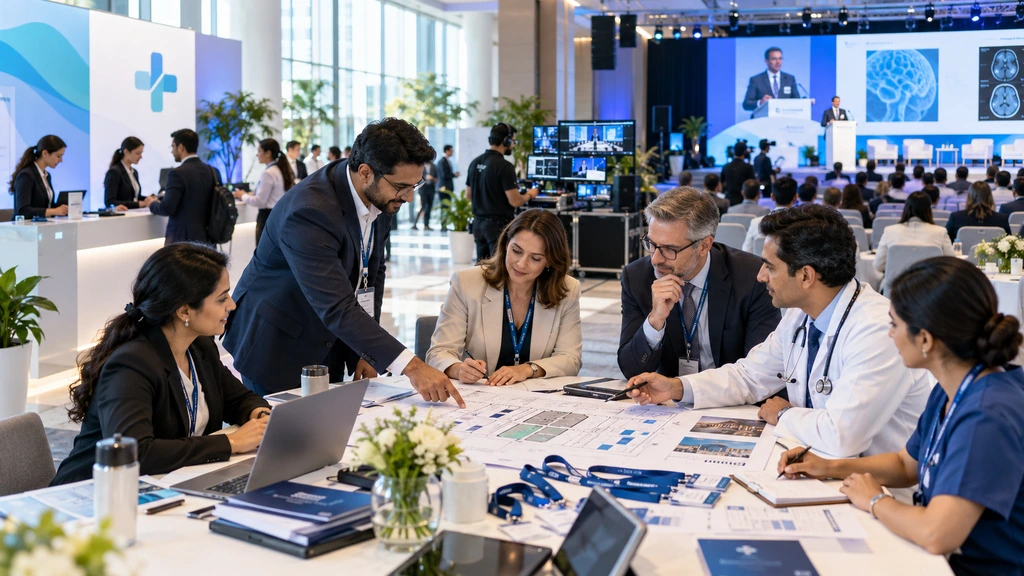
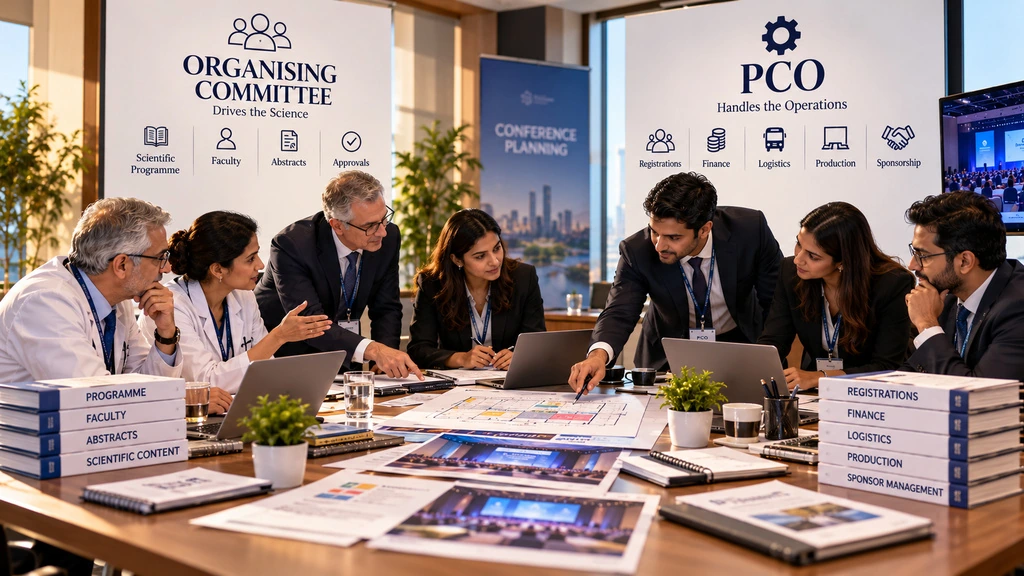
A professional conference organiser (PCO) is the company a medical society, association, or institution brings on board to plan and execute its conference from the ground up. While the organising committee stays firmly in charge of the science—the programme, the faculty, the content—the PCO takes on everything operational: registrations, finances, logistics, production, and sponsor management.

This distinction isn't a technicality—it's the whole point. A PCO doesn't simply execute instructions like a vendor, nor does it step into the committee's shoes. It occupies the space in between: the operational partner that handles the machinery of a conference, so clinicians can focus on running the conference itself, not the logistics behind it.

What Does a PCO Actually Do?

What Does a PCO Actually Do?

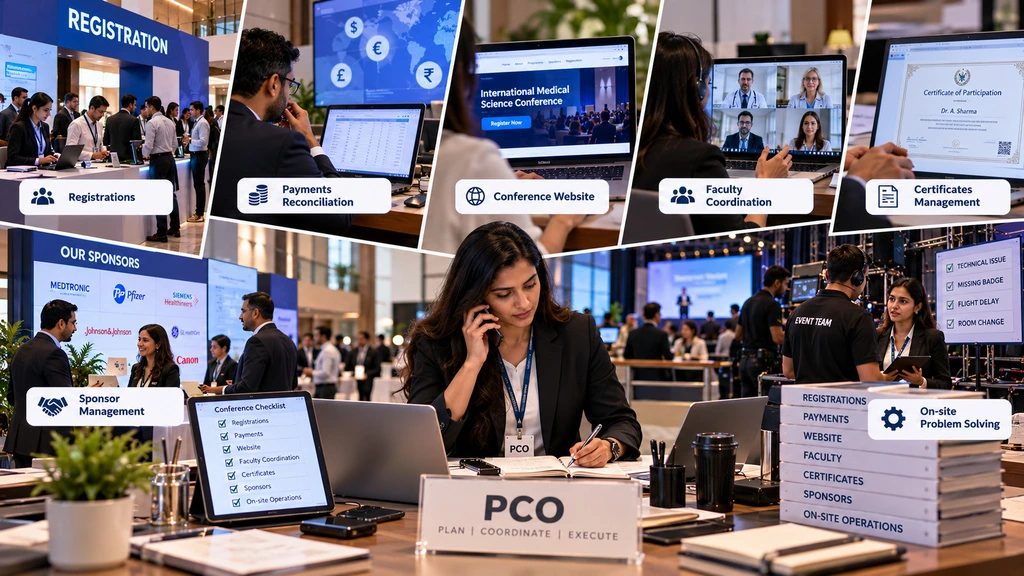
Most people hear "PCO" and picture someone booking a hall and printing a few banners. The actual job looks nothing like that. Here's what it really involves:

  • Chasing down registrations and actually getting people to show up, not just sending one email and hoping.
  • Reconciling payments from doctors paying in different currencies, on different timelines, through different platforms.
  • Managing the conference website — including the version that's suddenly getting hammered with traffic two days before the event.
  • Coordinating with dozens of faculty members scattered across institutions and time zones, all with their own schedules and demands.
  • Making sure certificates go out correctly and on time, not three weeks late with someone's name spelled wrong.
  • Keeping sponsors happy and their branding visible, without letting them quietly take over the scientific programme.
  • Handling the hundred small fires that pop up on-site that nobody planned for — a missing badge, a broken mic, a delayed flight.

The committee owns the science. The PCO makes sure that science actually reaches the room — on time, on budget, and without the audience ever noticing how much had to go right behind the scenes for that to happen.
What Stays With the Committee, and What the PCO Carries

Most difficulties in society–PCO relationships come from unclear boundaries rather than poor delivery. Agree this split in writing at appointment, and name a decision-maker on each side for every row.

Division of responsibility between organising committee and PCO

How Does the Medical Conference Planning Process Work?
Area Organising committeePCO
Scientific programmeOwns — sessions, topics, structure Schedules and operates it
Faculty Invites and selectsTravel, accommodation, on-site care
Abstracts Sets criteria, reviews, decidesPortal, workflow, author communication
Registration feesApproves the structureProposes model, runs collection
BudgetApproves and bears financial risk*Builds, tracks and reconciles
SponsorshipApproves sponsors and compliance limitsScout, Onboard,Network and Negotiations
VenueApprovesShortlists, negotiates, contracts
Production & delivery-Owns end to end

Core PCO, Association PCO, AMC and DMC

These terms get used interchangeably a lot, but they're not the same thing — and knowing the difference matters when you're deciding what kind of partner you actually need.

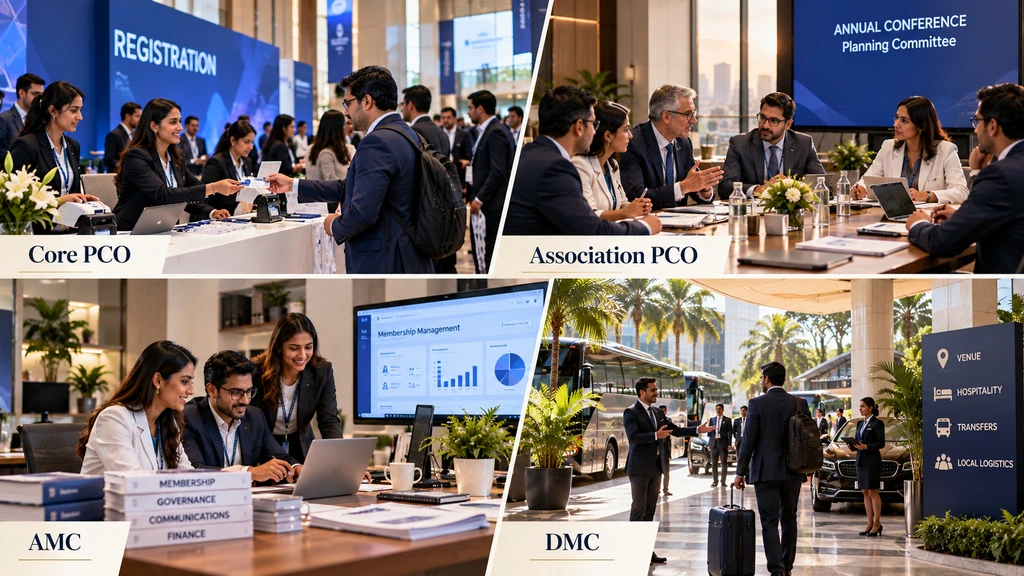
  • Core PCO — Handles the operational backbone of a single conference: registrations, logistics, production, on-site delivery, sponsor servicing. Engaged per event, sometimes per edition, without a standing relationship beyond that.
  • Association PCO — A longer-term appointment. Works with a society or association across multiple editions and rotating committees, carrying forward institutional knowledge — what worked, what didn't, who the recurring sponsors are — so each incoming committee isn't starting from zero.
  • AMC (Association Management Company) — Goes further than conference delivery. An AMC manages the ongoing running of the association itself — membership, governance support, communications, sometimes finances — with the annual conference being just one part of a much larger, year-round mandate.
  • DMC (Destination Management Company) — Local, ground-level experts in a specific city or region. Handle venue sourcing, ground transport, accommodation blocks, and on-site logistics tied to that destination — usually brought in by a PCO for international or out-of-city events rather than appointed directly by the society.

In short: a PCO runs the conference, an Association PCO runs it and remembers everything from last time, an AMC runs the whole association, and a DMC knows the destination cold. Depending on scale and need, a client might work with one of these — or a layered combination of two or three.

Core PCO, Association PCO, AMC and DMC
How Should a Society Select a PCO?

How Should a Society Select a PCO?

Choosing a PCO isn't just a procurement decision — it's picking who your reputation rides on for the next 12 months. A few things actually matter more than a polished pitch deck:

  • Medical conference experience specifically — not general event management. Ask what they've actually run: abstract workflows, CME accreditation, faculty coordination across institutions. Corporate event experience doesn't automatically transfer.
  • Proof of scale — if your congress runs 1,500+ delegates, ask for conferences they've delivered at that size, not just logos of clients they've worked with once.
  • Continuity across editions — committees rotate every year or two; a good PCO doesn't reset with them. Ask what happens to institutional knowledge when the committee changes — sponsor relationships, vendor negotiations, what went wrong last time.
  • Financial transparency — registrations, sponsorships, and payments run through the PCO. Ask how they report finances back to the committee, and how often.
  • Sponsor and exhibitor handling — this is where things quietly go wrong. Ask how they balance sponsor visibility against protecting the scientific programme from being overrun by commercial interests.
  • Response under pressure, not just on paper — ask for a real story about something that went wrong on-site and how they handled it. Anyone can promise "flawless execution" in a pitch; not everyone can back it up.
  • Timeline discipline — a serious medical conference needs planning to start 10-12 months out. If a PCO is casual about that runway, that's a red flag before the contract is even signed.

Occasion Xperts works as PCO for medical societies, associations, hospitals and institutions across India, including full conference management and a carbon-neutral conference delivery.

Frequently Asked Questions

What does PCO stand for?

PCO stands for professional conference organiser — a company appointed to plan and deliver a conference on behalf of an association, society or institution. In medical conferences the PCO handles operations, registration, finance and logistics while the organising committee retains ownership of the scientific programme.

What is the difference between a PCO and an event management company?

Scope and specialism. A general event management company delivers venue, production and logistics. A PCO additionally runs the machinery a scientific conference depends on: abstract submission and peer review, delegate registration and fee categories, sponsorship and exhibition sales support, CME administration, and conference finances that must balance.

What is a core PCO versus an association PCO?

A core PCO is appointed by the host organising committee for a single edition of a conference. An association PCO works with the society across multiple years and editions, carrying institutional knowledge between committees. Societies with an annual congress and rotating committees often benefit most from the second model.

How are PCO fees usually structured?

Three common models: a fixed management fee, a percentage of conference turnover, or a per-delegate fee. Fixed fees give the committee cost certainty; percentage models align the PCO with revenue but need care where the society bears financial risk. Ask for the model to be stated explicitly alongside what is included.

What should the society keep in-house?

The scientific programme, faculty invitations, abstract review criteria and final content decisions should stay with the committee — these are the society's academic responsibility. Registration, finance, logistics, production, sponsorship servicing and delegate communication are what a PCO is appointed to carry.

When should a society appoint a PCO?

Once delegate numbers, parallel sessions, sponsorship income and registration finances grow beyond what volunteer members can manage alongside clinical work — often somewhere around several hundred delegates or the point at which the conference carries real financial risk. Appointing 9 to 12 months before the conference is typical.

Planning Your Annual Day?

Every company celebrates differently, and that is exactly how an annual day should be planned. Tell us your city, approximate headcount and preferred month, and the Occasion Xperts team can help you work through suitable formats, themes, entertainment, production requirements and an initial budget direction.


enquiry@occasionxperts.com