
Medical Conferences

Sustainable Medical Conference Ideas

Sustainable Medical Conference Ideas

Sustainability isn't just about using eco-friendly materials in production—it's about taking responsibility for our own actions. It means adopting alternative, sustainable practices to reduce our carbon footprint at every stage of an event.

For us, that looks like: prioritising electric transportation for delegate travel wherever possible, replacing single-use plastic water bottles with refillable steel bottles, using cork-based disposables in place of conventional ones, and encouraging carpooling to cut down on overall carbon consumption

How Do You Reduce the Impact of Delegate Travel?

How Do You Reduce the Impact of Delegate Travel?

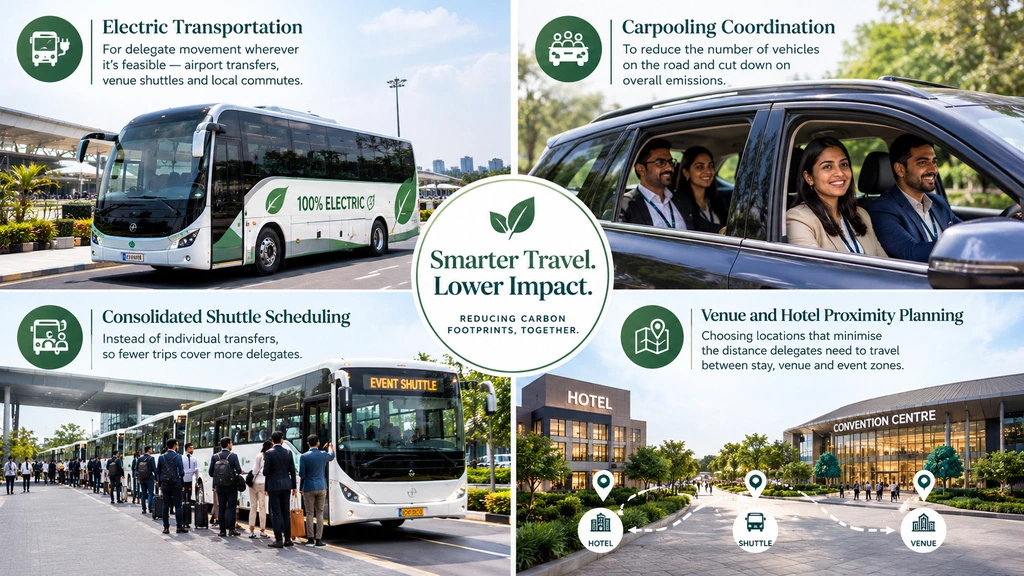
Travelling consumes towards lots of carbon footprints during the conferences. So we shoud treat it as a priority and not an afterthought. The following approach is something we can keep in mind when to reduce carbon footprints through travel:

  • Electric transportation for delegate movement wherever it's feasible—airport transfers, venue shuttles, and local commutes
  • Carpooling coordination to reduce the number of vehicles on the road and cut down on overall emissions
  • Consolidated shuttle scheduling instead of individual transfers, so fewer trips cover more delegates
  • Venue and hotel proximity planning, choosing locations that minimise the distance delegates need to travel between stay, venue, and event zones

Catering and Food Waste

Catering is one of the most critical factors to plan around, as it's also where the majority of event waste is generated. Managing it efficiently requires careful, deliberate planning at every step.

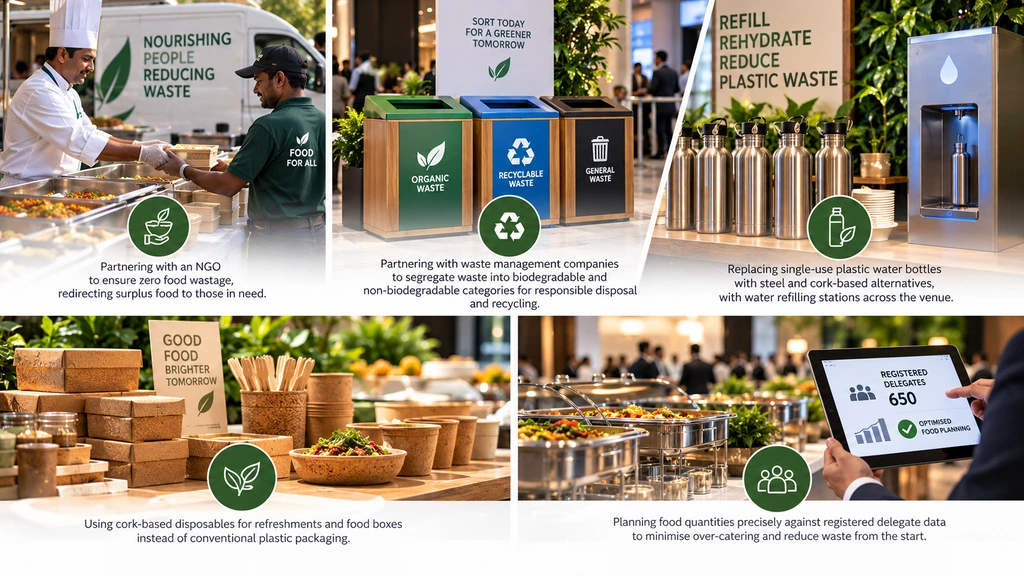
  • The first and foremost step is partnering with an NGO to ensure zero food wastage at the venue—any surplus food left after the event is redirected to those in need, rather than discarded.
  • The second step is partnering with waste management companies to segregate waste into biodegradable and non-biodegradable categories, so recyclable and reusable materials are put back into circulation, while the rest is disposed of responsibly and decomposed in an environmentally sound manner.
  • Replace single-use plastic water bottles with steel and cork-based alternatives, supported by water refilling stations across the venue—cutting down on plastic waste at the source.
  • For food service, use cork-based disposables for refreshment and food boxes instead of conventional plastic packaging.
  • And finally, we plan food quantities precisely against registered delegate data—ordering as per actual headcounts rather than excess buffer margins—so over-catering, and the waste that comes with it, is minimised from the start.
Catering and Food Waste
How Does the Medical Conference Planning Process Work?

Digitising Abstracts, Programmes, and Materials

Scientific conferences have long relied on paper—abstract books, printed programmes, delegate kits, certificates handed out at the end of every session. It's tradition more than necessity, and it's also where the easiest sustainability wins live. Most delegates today prefer digital versions anyway—easier to search, easier to carry, and far easier on the planet.

Conference materials: conventional versus lower-impact alternatives

ItemConventional ApproachLower-Impact Alternative
Abstract bookPrinted volume per delegate Digital abstracts in pdf or app based updates
ProgrammePrinted booklet, outdated by day oneDigital programme, updated live for schedule changes
PostersPrinted boards discarded after sessionUsing seed based printable paper which can later be planted into a plant
Delegate kitBag of printed materials and giveawaysMinimal kit containing only essential, and items made out of cork that can be reused
BadgesPrinted, laminated, single-useUsing Digital Qr based registration or cork made badges and lanyards
SignageDated banners discarded after eventReplace with Digital Standees and Brandings
SCertificatesPrinted and mailed physicallyDigital certificates issued after verified attendance

Keeping signage and badges undated is the small decision that makes reuse possible across editions — worth specifying at design stage.

Get a planning timeline for your conference dates

Venue, Energy, and Production Choices

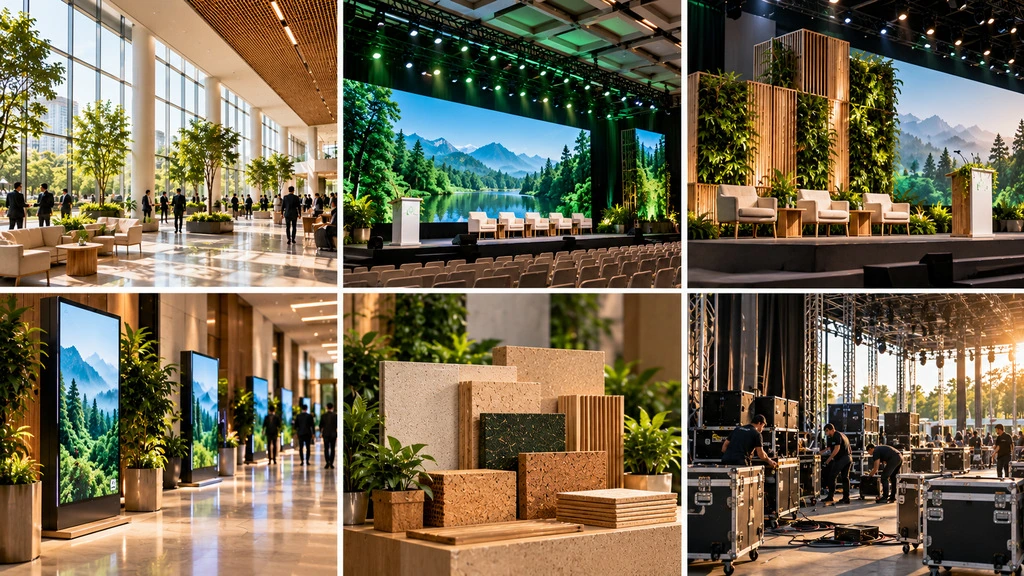
The venue and production setup of a conference carries a significant environmental footprint of its own—often more than delegates realise. Making the right choices here can meaningfully reduce that impact without compromising on experience.

  • Energy-efficient venues, — prioritising spaces with natural lighting, efficient HVAC systems, and renewable energy options wherever available
  • LED lighting for stage and production, — replacing conventional lighting rigs to cut power consumption significantly
  • Modular and reusable set design, — reducing fabrication waste by building stage elements that can be reconfigured or reused across sessions and editions
  • Digital signage over printed banners and standees, — minimising material waste from single-use branding
  • Responsible sourcing for fabrication materials, — choosing recyclable or biodegradable materials over single-use plastics and synthetic boards
  • Efficient scheduling of production timelines, — reducing unnecessary equipment runs, generator hours, and idle power usage on-site
Measuring and Reporting Credibly

Measuring and Reporting Credibly

Claiming that a conference is completely sustainable is a significant commitment in today's climate-conscious era—and to communicate that claim credibly, you need proof, not just intent.

To do this, partner with a carbon footprint management company that can collate data across every touchpoint of your conference on your behalf, while guiding you in the right direction wherever adjustments are needed. At the end of the process, they'll provide you with a comprehensive data report along with a certificate stating exactly how much sustainability the conference achieved—giving your claim real, verifiable weight rather than just good intentions.

Occasion Xperts organised “Best Practices in Emergency Medicine” as a carbon-neutral conference, applying environmentally conscious production techniques, waste reduction and energy-efficient measures across the event.

Frequently Asked Questions

What is the biggest source of emissions at a medical conference?

Delegate and faculty travel, in most cases by a wide margin—particularly for international congresses where attendees fly in. This is why venue location, hybrid access, and regional scheduling shape a footprint far more than on-site print items.

Can a medical conference be carbon neutral?

Yes, with accurate measurement and certified carbon offsetting. Occasion Xperts organised "Best Practices in Emergency Medicine" as a carbon-neutral conference through eco-friendly production, waste reduction, and energy efficiency.

How do you reduce catering waste at a large conference?

Guarantee Headcounts using actual registration numbers, stagger food service, eliminate single-use items, deploy plant-forward menus, and pre-arrange surplus food donation.

Should abstracts and conference materials still be printed?

Rarely. Digital event portals, e-posters, live digital agendas, and downloadable attendance certificates replace almost all paper requirements effectively.

Does a hybrid format make a conference more sustainable?

Yes, if it allows distant delegates to substitute travel rather than acting as a mere addition to full physical attendance.

How do we measure a conference's environmental footprint?

Gather travel origin modes at registration, require venue energy/waste reports, track catering metrics, and express total environmental impact per delegate.

Planning Your Annual Day?

Every company celebrates differently, and that is exactly how an annual day should be planned. Tell us your city, approximate headcount and preferred month, and the Occasion Xperts team can help you work through suitable formats, themes, entertainment, production requirements and an initial budget direction.


enquiry@occasionxperts.com