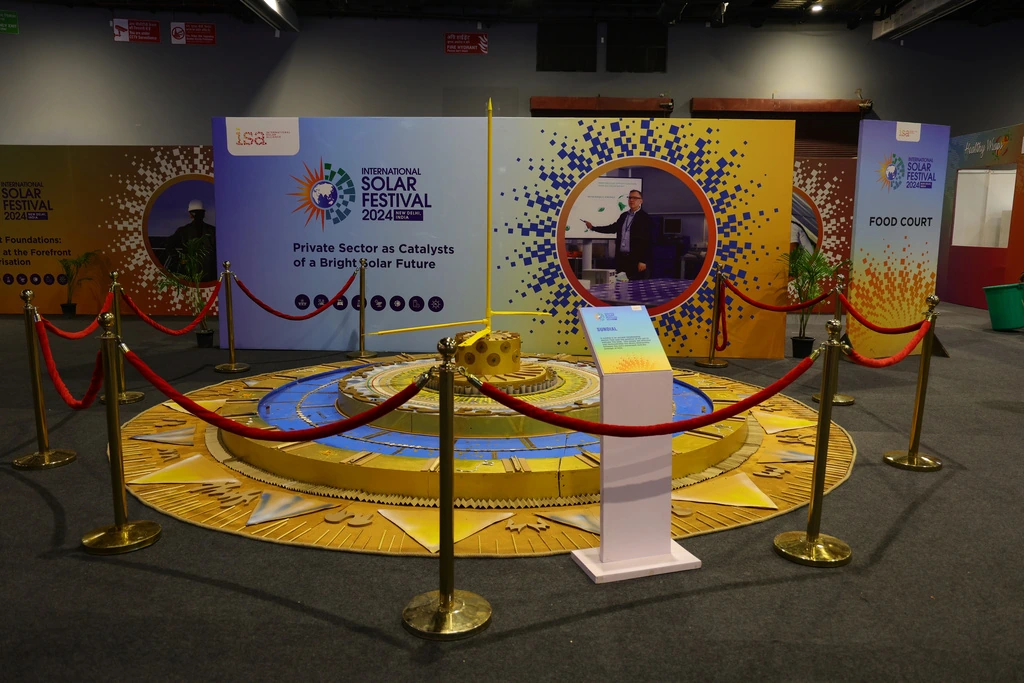
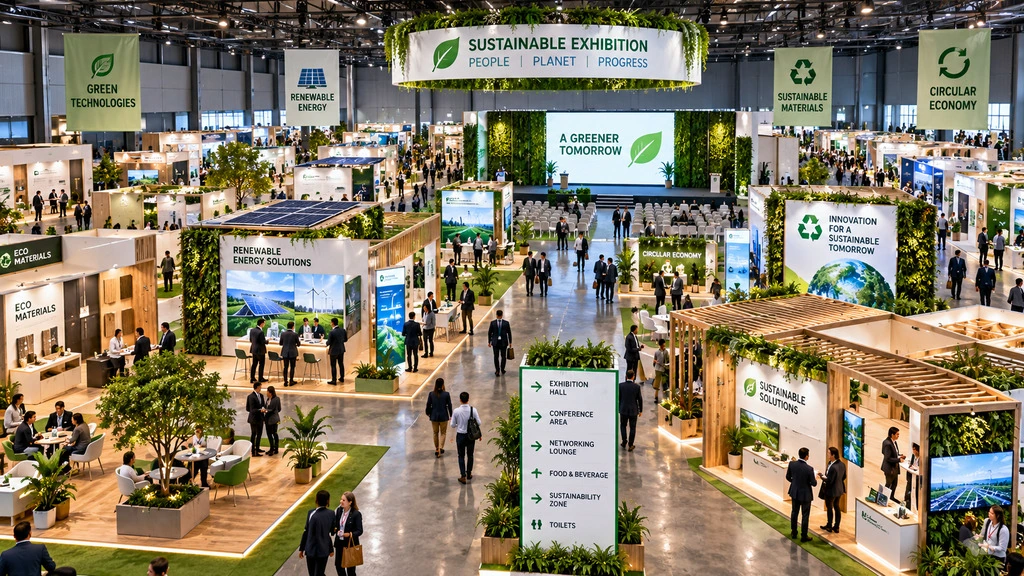
Ideas · Sustainable Exhibition Stall

Sustainable Exhibition Stall Ideas

Sustainable Exhibition Stall Ideas

Overview

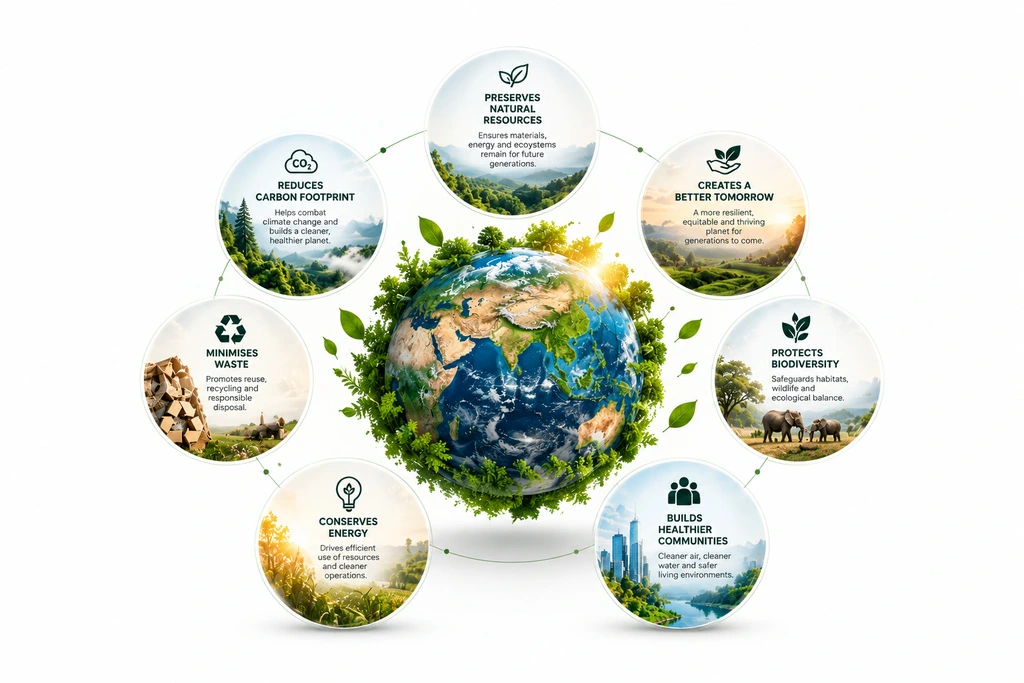
Going sustainable and conserving resources is no longer just a trend — it is our responsibility towards Mother Nature and our duty towards society. Companies that practice sustainability in their projects also earn higher credibility in the eyes of their audience in the market. This growing need of the hour has given birth to a new segment within the production industry, one dedicated to using sustainable methods for producing brandings and building booths. As a result, most companies now prefer sustainable materials to build their event brandings and trade fair booths — especially country pavilions and state pavilions, green energy stalls, and handloom stalls.

Why Sustainability Matters in Exhibitions?

Why Sustainability Matters in Exhibitions?

Before we learn about the various categories and materials available in the market to build sustainable stalls, we need to pause and learn why this matters.

Most Traditional exhibition stalls are built to last a few days, tops: MDF, Sunboard, Vinyl, and foam board materials, which are cheap and easy to work with, but not what happens to them after the event ends. ( usually lands in landfill) There’s a lot of waste for something that is meant to represent a brand's best face.

At the same time, audiences and buyers are getting sharper about who is actually walking the talk. A brand that talks sustainability and shows sustainability actually gains buyer attention way more than any other brand, as it makes the audience realise that the brand values the ethos they preach, and this is what creates a spark of credibility between them even before any conversation that takes place at the booth.
Which Materials Work — and Which to Avoid?

Modular Bamboo & Cane Pavilions

There's something about bamboo and cane that instantly feels warmer and more honest than a laminate panel. These structures go up without permanent joints, so the same pieces can be taken apart and rebuilt for the next show.

Honeycomb Cardboard Booths

Swap out MDF or plywood for recyclable honeycomb board and you get a stall that's lighter to ship (which quietly cuts down on transport emissions too) and fully recyclable once the last visitor walks away.

Living Green Walls

A backdrop of real plants — or moss, if you want something lower-maintenance — does double duty. It's genuinely striking to look at, and it doubles as an air-purifying feature. Green energy and wellness brands in particular tend to love this one.

Solar-Powered Interactive Stalls

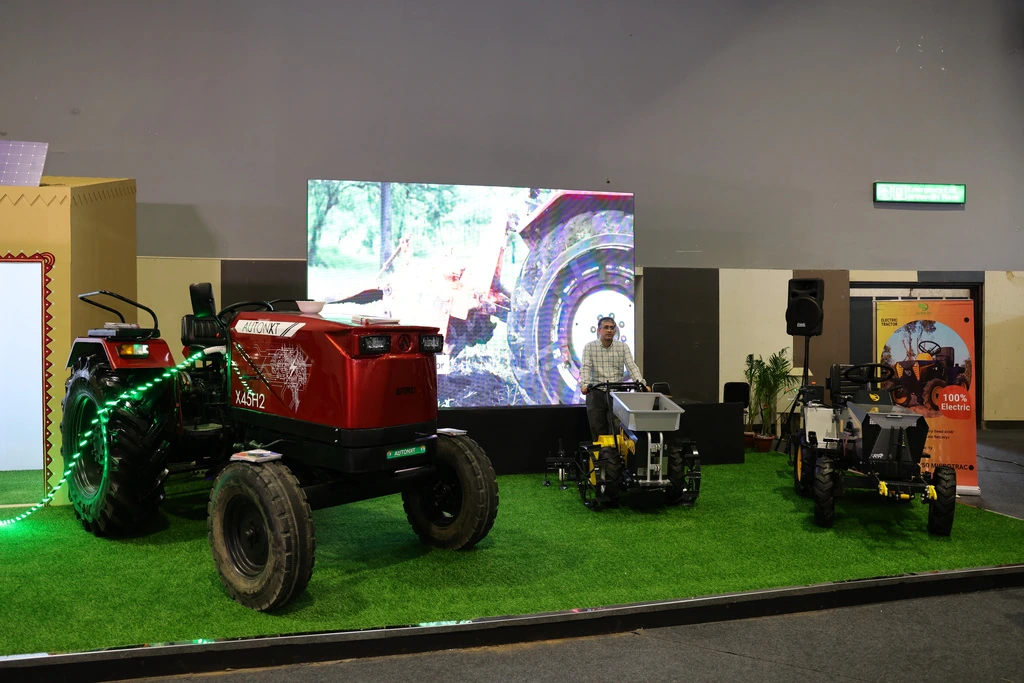
This is where the stall becomes the pitch. Lighting, screens, charging points — all run off solar panels built right into the canopy. For a green energy, EV, or renewable tech exhibitor, there's no better way to demonstrate the product than to let the booth itself run on it.

Upcycled Shipping Container Booths

Repurposed shipping containers give you something rugged, reusable, and visually bold — an industrial edge with a sustainable backstory.

Which Materials Work — and Which to Avoid?

Jute, Canvas & Natural Fiber Textile Stalls

Trade the usual vinyl or flex banners for jute, hemp, handwoven natural fabric, or canvas. Canvas in particular is a nice middle ground — cotton or linen canvas is biodegradable, durable enough to survive repeated setup and teardown.

Certified & Recycled-Content MDF

MDF gets a bad reputation in sustainability conversations, and often for good reason — but not all MDF is created equal. FSC-certified, low-formaldehyde (E1-grade), and recycled-content MDF are genuinely sustainable choices when sourced responsibly, offering the same workability and finish as standard MDF without the same environmental cost.

Reclaimed Wood & Cork

Cork flooring brings a renewable, sound-softening quality underfoot, while reclaimed or scrap wood gives structure a lived-in, premium warmth.

Digital-First, Zero-Print Stalls

Cut the printed banners and standees entirely and lean on large digital screens with QR-code-driven content instead.

Mycelium Display Units

Furniture and display blocks grown from mycelium (yes, mushroom-based material) are fully biodegradable .

Rental-Based Modular Kits

A set of reusable frames and panels that gets rented, reassembled, and reconfigured for each new event.

How Do You Make the Recognition Segment Memorable?

Materials to Watch Out For

Standard MDF — The uncertified, resin-bonded version most stalls default to. It's bonded with formaldehyde-based adhesives and can't be meaningfully recycled, so it almost always ends up in landfill after a single use. (Certified and recycled-content MDF, as above, is a different story.)

PVC & Vinyl Banners — One of the most common materials in the industry, and one of the most wasteful. Production and disposal both release harmful compounds, and the material simply doesn't biodegrade.

Foam Board / Styrofoam — Cheap and lightweight, which is exactly why it's everywhere — but it's essentially non-recyclable in most municipal systems and can persist for centuries.

Single-Use Laminates & Vinyl Wraps — Often glued directly onto a structural board. Even if the base material underneath is fine, the lamination makes the whole piece unrecyclable.

Solvent-Based Paints, Inks & Adhesives — Release VOCs (volatile organic compounds) during and after application — a real air-quality concern in enclosed exhibition halls. Water-based alternatives do the same job without the fumes.

Virgin Plastic Fixtures — Small clips, connectors, and fittings are easy to overlook, but they add up fast across an entire stall build.

What About Operations, Print and Giveaways?

The structure itself is only part of the footprint. In our experience, print, giveaways, catering, and freight quietly account for just as much of what ends up in the bin at the end of a show.

  • Go digital with your literature. Send the brochure to the lead record instead of handing over a bag of paper — most of it gets binned before the visitor leaves the hall anyway.
  • Print small, print late. A short run of a one-page leave-behind beats boxes of collateral shipped back to the office unopened.
  • Rethink the giveaway. Either it's genuinely useful, or skip it — branded plastic trinkets are usually the most visible waste on any show floor.
  • Consolidate your freight. One full load beats several part-loads, and sourcing locally cuts transport distance down further.
  • Use reusable crates, not single-use packing, for anything moving in and out of the venue.
  • Keep catering simple — compostable or reusable serviceware, and realistic portion planning so less food goes to waste.
  • Switch things off overnight. Screens and lighting left running is an easy one to forget, and an easy one to fix.
  • Agree on waste segregation before teardown — sort out the streams with your stand builder and the organiser in advance, not on the day.

None of this needs a bigger budget — mostly just planning a little earlier than usual.

What About Operations, Print and Giveaways?
How Do You Make Sustainability Claims Credibly?

How Do You Make Sustainability Claims Credibly?

You can also partner with agencies that measure your event's carbon footprint and track the sustainable practices built into the process — offering a certificate for each event that quantifies just how sustainably your booth was executed

Frequently Asked Questions

What makes an exhibition stall sustainable?

Reuse comes first. A stand designed to be redeployed across several shows avoids far more waste than one built from recyclable materials and thrown away after three days. Beyond reuse, what matters most is the choice of material, avoiding bonded composites that can't be separated, right-sizing the build, and planning in advance what happens to everything at teardown.

Are sustainable exhibition stalls more expensive?

Usually higher on the first show, lower across several. A modular system costs more upfront than a single-use custom build, but from the second show onward, you're only paying for graphics and refurbishment. If you exhibit twice a year or more, the crossover point typically arrives quickly — so it's worth modelling cost per show rather than cost per build.

What materials are best for sustainable stall construction?

Reusable aluminium or steel framing, FSC-certified or reclaimed timber, fabric graphics in place of laminated boards, and modular flooring that clips together rather than being glued down. What to avoid matters just as much: bonded composites, single-use vinyl, and anything glued to a substrate — none of it can be separated for recycling once the show's over.

How can we reduce waste at teardown?

Plan the teardown at design stage. Specify mechanical fixings rather than adhesives so components separate cleanly, keep graphics undated so they can be reused, arrange storage before the show rather than after, and agree in writing with your builder where each material stream goes.

Do exhibition organisers have sustainability requirements?

Increasingly, yes — many now publish sustainability guidelines covering materials, waste segregation and single-use plastics, and some report exhibitor waste. Check the exhibitor manual early, because requirements can affect material choices you would otherwise lock in at design stage.

How do we avoid greenwashing our stand?

Only claim what you can evidence. "Built from a reusable modular system now on its fourth show" is verifiable; "eco-friendly stand" is not. If you publish sustainability claims about your exhibiting programme, keep the underlying records — reuse counts, material specifications, waste routing — so the claim survives scrutiny.

Planning an event