
Guide · Corporate Events

How to Choose an Event Company for a Corporate Leadership Offsite

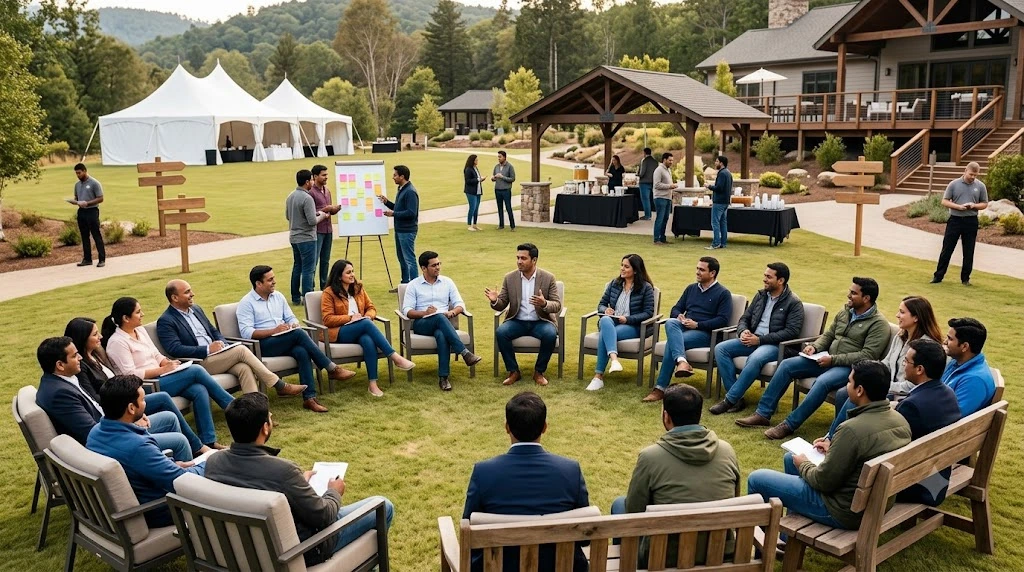
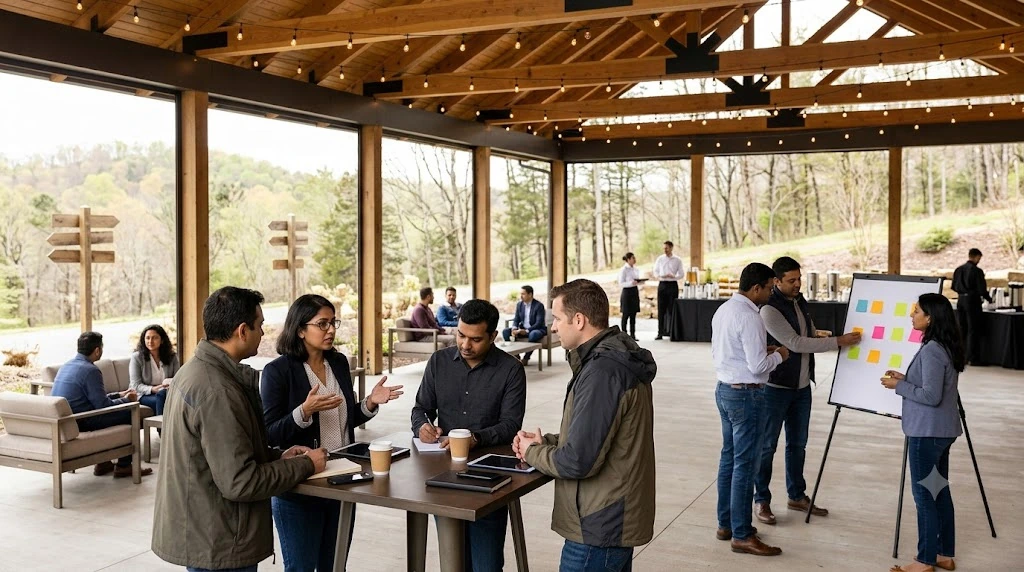
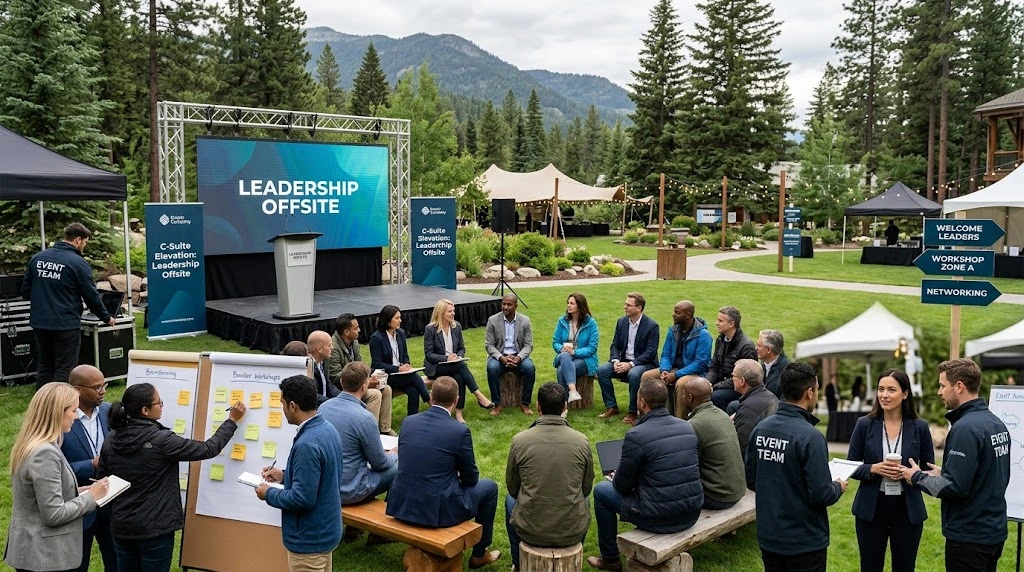
Leadership offsite session in progress at a hotel venue

Choosing the right partner comes down to four things:

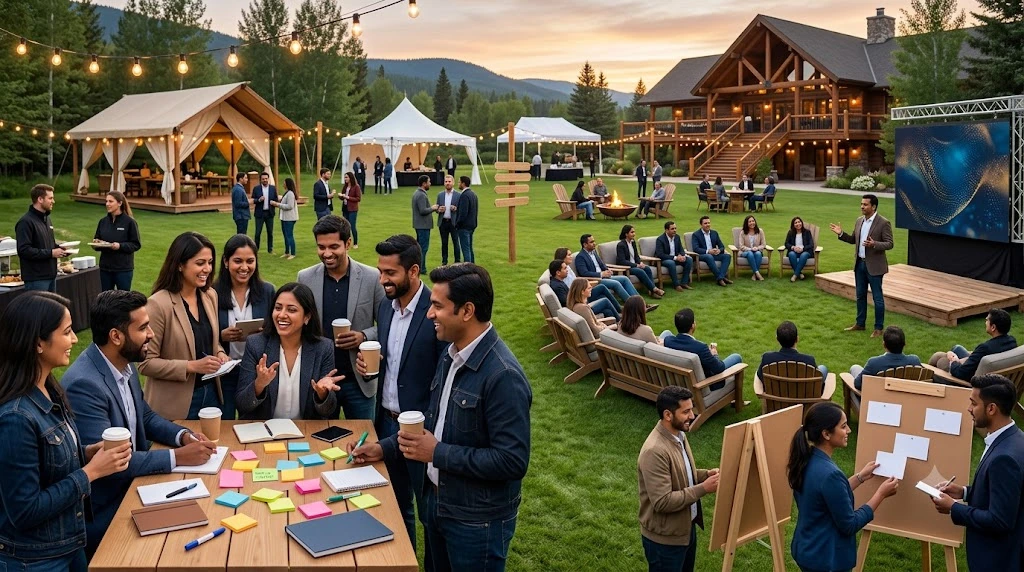
  • Executive Privacy & Venue Networks: Corporate Leadership offsites need discretion, not crowded convention hotels. Choose a partner with strong access to private, boutique properties that offer relaxed spaces like lounges and fire pits for organic conversations and also luxurious spaces that can act as a one-stop solution.
  • End-to-End Capabilities: Your partner should manage everything — travel, high-speed Wi-Fi, dietary requirements, technical production, and on-site support — under one roof, so nothing gets missed.
  • Transparent Cost Breakdown: Avoid vague, lump-sum quotes. A reliable firm gives you a clear, itemized breakdown showing exactly where the budget goes and where costs can be optimized.
  • Strategic Alignment: The best offsites aren't just packed with generic team-building activities — they're designed around your actual business goals, balancing focused strategy sessions with genuine downtime.
Why Is Choosing an Offsite Partner Different From Any Other Event?

Why Is Choosing an Offsite Partner Different From Any Other Event?

A leadership offsite is small in scale but high in stakes. With a smaller audience, every detail is magnified — there's no room for mistakes, because even a minor hiccup can compromise the entire experience you set out to create.

And "hassle" doesn't just mean issues during the show — it also means having backup plans ready for every scenario. Say you've chosen a venue accessible only by boat, and the weather suddenly turns. Without a solid Plan B, the day's agenda falls apart entirely.

This is exactly why choosing an offsite partner is different from choosing any other event partner. An offsite partner needs to know the location inside out — the restaurants, venues, local transporters — and have strong on-ground connections to handle anything that comes up, whether it's a production glitch, a weather change, or a last-minute venue switch.
What Criteria Should You Evaluate Agencies Against?

Evaluate offsite leadership agencies on three fronts: strategic alignment, operational expertise, and cultural fit.

Core Capabilities

  • Strategic Facilitation: Look for a partner who can craft agendas that genuinely address complex business challenges, not just fill the day.
  • Leadership Development: They should bring proven, thoughtful frameworks for executive growth — not one-size-fits-all exercises.
  • Customization: Be wary of agencies that rely on the same rigid template for every client. Your offsite should feel built for you.
  • Actionable Outputs: The best partners leave you with more than memories — expect clear, measurable action plans you can carry forward.
What Criteria Should You Evaluate Agencies Against?

Operational Expertise

  • End-to-End Logistics: A strong partner takes ownership of everything — venue, technology, and hospitality — so you don't have to juggle multiple vendors.
  • Risk Management: Ask how they handle the unexpected — travel disruptions, health emergencies, technology failures. A solid contingency plan speaks volumes.
  • Digital Integration: If a hybrid format is on the table, make sure they can deliver it seamlessly, without compromising the experience.
  • Vendor Networks: Well-established global relationships often translate into better pricing and access to venues you wouldn't find on your own.

Experience & Track Record

  • Target Scale: Confirm they've successfully managed groups the size of yours — not just larger or smaller.
  • Industry Familiarity: A partner who understands your industry's unique pressures will design a more relevant, resonant experience.
  • Client Retention: High repeat-client rates are a strong indicator of consistency and trust.
  • Proven ROI: Ask for real case studies that show measurable business impact after past offsites — not just glowing testimonials.

What Should You Ask in the Pitch?

When it comes to a leadership offsite, the questions you ask shouldn't just cover logistics — they need to dig into how well an agency understands discretion, strategy, and on-ground reliability.

What Should You Ask in the Pitch?

On Strategic Alignment

  • How would you shape the agenda around our specific leadership goals this year, instead of following a standard offsite format?
  • How do you strike the right balance between focused strategy time and genuine downtime?
  • Have you worked with leadership teams similar to ours in size or stage — and what did that experience look like?

On Privacy & Venue Selection

  • Can you source private, boutique properties instead of large convention-style hotels?
  • How do you protect confidentiality during sensitive discussions — through venue layout, staff briefings, or otherwise?
  • If we need the location or guest list kept discreet, how do you handle that?

On Facilitation

  • Since our own senior leadership usually facilitates sensitive internal conversations, how do you support that without stepping in too much?
  • Do you bring in external speakers or facilitators, and how are they chosen?

On Risk & Contingency

  • What's your backup plan if weather, travel, or the venue falls through at the last minute?
  • Who's actually on the ground managing things, and how much can they decide on the spot if something goes wrong?

On Local Expertise

  • How well do you know this specific city or destination — the restaurants, transporters, backup options?
  • Have you run an offsite here before?

On Outcomes

  • What does a successful leadership offsite look like from your end, and how do you measure that afterward?
  • Can you share a time your team handled a major last-minute disruption smoothly

What Should Your Brief to Agencies Contain?

  • What's the offsite really meant to achieve — strategy, alignment, bonding, or a bit of everything?
  • How many people are coming, how senior are they, and are partners/spouses joining too?
  • Do you have set dates in mind, or some flexibility? And how many days are you thinking?
  • Any destinations you're leaning toward — keeping accessibility and privacy in mind?
  • Will your own team run the sessions, or do you need outside facilitators?
  • How much of the time should be structured strategy versus just letting people unwind?
  • What's your rough budget, and where are you willing to flex versus not?
  • Anything from past offsites that worked well — or didn't — that you'd want repeated or avoided?
  • Which locations are you seeking to host the offsite at, the one with direct flights or the one neabry,or somewhere outside the country where you are comfortable with taking a one stop flight
  • Ask them to suggest Sight seeing session or any local experience they could explore in evening or make them a clear view you want and indoor gala dinner.
  • What are you hoping to see in the pitch itself — a cost sheet, mood board, or full concept note?
What Should Your Brief to Agencies Contain?

Frequently Asked Questions

What should a leadership offsite proposal include?

A leadership offsite proposal should include multiple destination options — at least one accessible via direct flights, and another that can be reached by road for added flexibility. It should also outline a mix of indoor and outdoor experience options, along with a complete 3-day itinerary covering gala dinners, team-building sessions, light entertainment, sightseeing, and local experiences unique to each destination. Menu options for every suggested restaurant or dinner venue should be included as well. Finally, the agency should provide an element-wise cost sheet for each destination option, so costs can be compared and evaluated side by side.

How far in advance should we appoint an agency?

If you're looking at a destination outside the country, allow two to three months to finalize everything. For a nearby destination within the country, a month and a half is usually enough to lock in the agency. International destinations require additional time for permissions and negotiations, so it's always wise to build in some buffer — this helps secure better rates and avoids any last-minute hassle.

Should we choose an agency that facilitates content too?

Only if the content is genuinely generic. Strategy content is usually better owned by your team or a specialist facilitator, with the agency handling design, logistics, and production. Ask directly which model an agency prefers and why.

How do we compare agency quotes fairly?

Invite proposals from 3-4 agencies, then shortlist the best destination options from among them. Based on your selections, create a fresh, consolidated brief and send it to all the agencies, asking them to quote for the same destination, venues, and experiences. This ensures a fair, apples-to-apples comparison and competitive pricing. If you notice a significant difference in pricing between agencies, don't hesitate to raise it directly in the review meeting and ask why.

Planning an event